Wednesday, February 19, 2014

The Main Features of Pig Farming in Canada

Canada ranks sixth in the world in pig production with a population of about 15 million pigs, the other countries being China(466), EU(153), USA(60), Brazil(32 and Russia(17). Most Canadian pig farms are located in the Prairies that produce grains and grain by-products for feed use. And now Canadian pig farming is marching advance to modernization, scale and intensification development with high production level.
http://www.pig-farming.net

The main features of pig farming in Canada:

1. Carrying out performance measurement and genetic evaluation:
Since 1937, Canada pig industry has access to a uniform national testing system, the National Record of Performance Swine Testing Program. It provides producers with a basis for accessing their breeding stock using techniques such as ultrasonic recording of fat measurement in live animals. The program is now administrated by the Canadian Centre for Swine Improvement, with member organizations throughout the country.

2. Employing modern pig production technology:
Canada pig farming automation has been improved with the development of modern pig farming technology. Pig feeding, watering, feces cleaning, temp, humidity and pig house ventilating are all computer-controlled; to prevent disease transmission to keep animals’ health, SEW (segregated early weaning) is widely adopted, which is a kind of sow---nursery pig---barren sow three-level breeding pattern, improving the pig production quality, reinforce epidemic prevention and reducing medical treatment cost. Many pig farms have a cooperation, forming a pig production association including producing, processing and marketing, to enhance market competitiveness.

3. Attaching great importance to disease prevention-control and animal products quality-safety:
Canada government has established rigorous pig farming sanitation and quarantine standards to ensure consumers’ food safety, widely adopting PSS(porcine stress syndrome) and PSE(pale soft exudative pork) DNA test for the boar. In Canada, pig farmers must have the breeding license and main disease control measures are:
---Popularizing the artificial insemination around the country;
---Implementing segregated early weaning for piglets;
---Three-level breeding pattern, the sow, piglet and commodity pig are raised in separated pig farms (3 km away from each);
---Regular sampling monitoring by veterinarian.

http://goo.gl/LNcHAL
4. Putting high value on ecological environment protection:
Canada genetic engineering researchers has developed “enviro-pig” through genetic recombination method, and enviro-pigs have self-sufficient phosphorus they need. This technology lessens phosphorus content in pig feed and 60% phosphorus content in pig waste, so lessens feed cost and protects the environment. There are two main ways for pig waste disposing at present:
---Compost disposing, which is a kind of bio-treatment method. During the procedure of waste fermentation, a large number of microorganisms convert the waste into moist stable products of biotic components conforming to the hygiene standards;
---Sewage recycling, the fecal water is transported into the waste water treatment pond and after the anaerobic and aerobic fermentation, it can be used for crops fertilizer and irrigation, then there will be a positive cycle between pig farming and crop farming.

Email: nicholepandora@gmail.com

Wednesday, February 12, 2014

Pig Farming in France Has The Top-notch Indoor Facilities

France is currently the largest beneficiary of farming related subsidies from the EU, and is fiercely protective of them. Pig farmers in France are currently being invited to register requests for subsidies for up to 17,000 Euros to convert their pig accommodation from stalls to “loose housing”, as long as they fulfill the requirement of having a minimum 20 sows or 60 pigs, and apply before the 21st November 2012.Farmers and the farming profession are a respected and revered part of French culture, and a high degree of legal and financial protection for farmers is built in by the government. The move is designed to bring French pig farmers in line with new European and national standards.

Pig farming in France has been a hug improved, which after 50 years’ development,from decentralized breeding to scale farming. It has formed a French model of pig production.Today’s pig barns and buildings in France have been shaped by breakthroughs in technical and technological development. And today’s pig farming in France has the top-notch indoor facilities.


  • Pig feeder and troughs: materials with increasing resistance to acid corrosion have been chosen to make feeders and troughs, and the feeder and trough can also be equipped with efficient stainless-steel controller system that will radically eliminate feed cost.


  • Pig watering and water purification: automatic watering system and water purification system are adopted to ensure zero water waste and high water quality for pig health and ultimately for production performances.


  • Pig gestation crates: using a split-level system, the gestation crates help improving the weaned pigs survival rates, and decreasing the piglets death losses caused by crushing.


  • Pig farming heating and cooling system: the trend today is that heating is even being incorporated into the grower phase via heat recovery systems, and the sow stalls are increasingly being fitted with either regular or spray cooling systems, which helps a lot in higher pig health standards.

Wednesday, January 15, 2014

Swine Industry in England

The pig industry is a major sector in UK agriculture. UK pig industry has its origin in 6000 years’ farming. And throughout this long period, the pig has been a important and valuable farming animal that has contributed to consuming product wastes, fertilizing the land and providing sufficient meat source. But UK pig industry sector is different from many other sectors, it is not supported by state or European subsidy. Nowadays, pigs are only kept in a farmed condition in UK, as the practice of traditionally keeping pigs in the back gardens in the countryside has been outlawed.

The undermined UK industry by the cheap pig imports and the markedly risen pig production costs owing to farmers’ complying with the welfare legislation, these tow factors have made an strong impact on a significant contraction of the national pig industry in 2013. And the risen pig production cost was caused by the blighted crop production because of the global droughts which has led to the risen prices of pig feed. And this factor has had an impact on UK pig industry for a long time till the end of July, 2013. So it means the gap between feed and pig production prices is being reduced. And pig industry independent adviser Peter Crichton has urged bankers to look more favorably upon farmers who want to invest in pig farming.

pig farming in England
But he also indicated that UK pig farming had a shortage of pig housing and finisher, though UK pig farming at the moment was a better state of health.

“The problem is that quite a lot of diversification scheme have taken place with business units, barn conversions and so on, and this has reduced finisher space.” He said.

“We have also seen a lack of investment because of the unprofitable years that we have had, really since 1996-1997, so some finishing space is wearing out.”

“We need bankers to take a more enlightened view of contractors as well as independent producer who want to extend by building permanent finishing facilities on their units, which can in some cases be used for other purposes if pig production were to go out of favor.”

Contract breeding and finishing could insulate pig keepers from the very sharp falls that could often occur in pig prices, providing them with a regular income rather than exposing them to “risk and reward”, he explained.

And he said that the pig business collapse was not a symptom of poor trading conditions currently, but the company had been a casualty of a long trading period previously, when feed costs had been unsupported high in relation to pig returns.

Whether you are looking for Pig Farrowing Crates, Gestation Crates, Nursery Crates or Plastic Floor, Cast Iron Floor or Wet/Dry Feeders, you're sure to find one here.
Please for free Contact Us : nicholepandora@gmail.com

Wednesday, January 8, 2014

The Pig Industry in The United States

Abundant grain forage and advanced rearing techniques make America the third ranking after China and EU in pig production, the first ranking in export and the fifth ranking in import. Pork is an important component of American agriculture and an important part of the American diet and way of life, which is another reason boosting American swine production.

But in the past, traditionally pig production was kept as a subsidiary to the crop enterprise and used to add value to corn when corn prices are down. Very little effort was spent to improve the genetic base, to optimize productivity, or to cultivate consumer acceptance for pork being a commodity.

As producer began to realize that inputs to pig industry led to considerable returns, it began to grow in importance as a profit acquisition and in the food marketplace. Rapid gains were made in productivity as management inputs were well-adjusted.

For much of the 19th to 20th centuries, pork was preferred meat in the US. Hogs were valued not just for their meat but for the lard, and the lard could be used for cooking, baking and making candles and soap. As Americans became more health conscious, pig production began to focus on the pigs’ ability to efficiently convert feed into protein, which even resulted in a much leaner type of pig being produced.

There has also been a big and important change in how and where pigs are produced over the past 50 years. Low consumer prices, and therefore low producer prices, and smaller pig farms with decreasing profits, have resulted in larger, more efficient swine industry operations; and pig farming has evolved into a highly automated production process with minimum labor cost. Besides, the dramatic shift from small-scale production to vertical-integration factory farms is enhancing the overall level of industry automation. The larger operations with scientific management practices enabled farmers to significantly increase the efficiency of production by using less labor.

Though pork production has evolved over the past 300 years in the US for the economic value of pork to the US and American agriculture, now there still are many respects imposing the restriction on the US pig industry moving on. And issues restricting the development of US swine production: environment concerns, cost competitiveness, changing regulations, access to export markets, animal welfare, health status, food safety, product quality, traceable; high oil and feed prices, internal and external competition also hamper the US pig industry. Unfortunately, even with economic recovery on the horizon, the pig farming industry will continue to decline.

Have any question, feel free to contact with: nicholepandora@gmail.com 

Thursday, January 2, 2014

Pig Farming in Indian

Because of the religious belief, many Indians do not eat pork, but what makes everyone surprised is the live hogs raised in India has a large amount, India has a great potential market for pig industry.

According to a study of Animal Husbandry and Meat Industry in India, pig farming with a profit of 60% topped all other types of subsidiary occupations like dairying 10%, poultry 30% in the past few years.

With the introduction of new techniques for rearing and breeding of pigs and appreciative-encouraging Government Schemes. Farmers and keen people are now attracted to pig farming, because of its low starting cost and decent earning at the same time. Moreover, not only traditional farmers, young-generation farmers from all over the country trying their hands in different areas of animals husbandry and in these areas the most popular one is pig breeding farms.

Rising per capita income, growing urbanization and unfolding globalization are boosting the demand of high value commodities including meat. Due to these changes in recent past years, a rapid shift has taken place in the dietary habits in flavor of non vegetarian diet. As a result, demand for pork has swiftly increased and the India domestic market price for pork has risen form Rs. 30-40 kg to 90-140 per kg over the last 5 years.

With gradual replacement of societal and religious taboos, the pig rearing by using advanced technical management practices is becoming more and more popular across all social strata finding this enterprise with comparatively more earning.

The Indian government has announced a scheme, Pig Development Scheme, which was started in 2010, aiming at encouraging commercial pig farming by farmers or labourers; improving production performance of native breed through cross breeding by using selected pigs of high performing breeds; providing incentives in terms of capital subsidy for ensuring the viability of the pig breeding, rearing and related activities.

But before the Pig Development Scheme, pig rearing has traditionally been in the main occupational axis of the socially backward down-trodden class of Indian population since immemorial time. The average production of pigs in India is less compared with the developed countries. The main reason is the lack of knowledge in respect of pig rearing and breeding, and another reason is due to the image of pigs in Indian society. However, pig farming is no more restricted to lower class people at present for the implement of the Pig Development Scheme, and also most of the higher caste people have seen the economic importance of this animal and have started pig farming in scientific manner.

E-mail: nicholepandora@gmail.com or info@pig-farming.net

Tuesday, December 31, 2013

Cooling and Heating System Equipment of Pig Farm

Usually in summer, there is 4-month scorching weather. The temp. is 25℃~35℃ and the humidity is ≥70%. The pig is kind of thermostatical animal with thick subcutaneous fat and underdeveloped sweat gland, and the hot-humid weather has a strong impact on pigs’ production and breeding. the other way round,in the winter the weather is too cool,also bad for pigs’ production and breeding. So the pig house cooling and heating is very important to ensure high efficiency of pig farming.

Heating Equipment
The pig house heating diversity heating and local heating of two. Central heating by a central heating equipment heating and heat medium transport pipeline to the barn radiator, heating the air of pig, to maintain optimum temperature within the pig. Local heating hot water floor heating, electric panels, infrared lights. Such as heat lamp is employing the ion-tech to produce sun-like thermal radiation which can create ideal conditions for rearing  pigs. In pig farming, the infrared transforms the electric into heat and heat radiation acts directly on the bodies of piglets, the blood and lymph vessels microcirculation is improved and a greater amount of oxygenated blood is supplied to the cells and reducing the heat waste to help piglets growth and resistance to infection and diseases.

Ventilation Equipment
The farms use ventilators multi large-diameter, low-speed, low-power fan. This large amount of fan ventilation, low noise, low power consumption, and durable.
The ventilation should pay attention to the following questions: (1) Avoid the fan ventilation short circuit, must not the fan set on the wall, below through the door to allow the air to form a short circuit; (2) unilateral exhaust should The side adjacent barn air vents located on the opposite side to avoid a discharge of the aggregate of inhalation is another pig immediately; (3) as far as possible so that the airflow in the most of the space in the barn, especially gutters on, do not result in dead ends, so as to achieve the purpose of ventilation.

Cooling Equipment
Although ventilation is an effective cooling means, but only make down to close to homes outside ambient temperature when homes outside ambient temperature is greater than the upper limit of the pig production temperature (27 ~ 30 ℃), ventilation while cooling measures should also be taken to ensure The control suitable range.
Now farms commonly used cooling system such as – fan cooling system, spray cooling, spray cooling system and drip cooling system, humidity latter three cooling systems, is not suitable for farrowing homes. fan cooling system included fiber reinforced plastic fan,negative pressure fan for piggery,evaporation air cooler,evaporation cooling pad. Evaporation air cooler system is a kind of water-cooled air conditioner, integrating the functions of cooling, ventilating, dust preventing and smell removing.  Because evaporation cooling efficiency can reach 75 to 90%, it has been gradually used widely around the world.

Amisy pig farming equipment has a full selection of pig equipment designed for piglets breeding, sow farrowing, fattening pigs breeding and adult pigs breeding. Hot sale products are pig farrowing crate, sow gestation crate, piglets nursery crate, pig feeders and waterer. Besides we also supply piggery cooling & ventilation machines, piggery warming machines, etc.

Email:nicholepandora@gmail.com or info@pig-farming.net

Monday, December 30, 2013

6 Aspects For Successful Start A Pig Farm

The demand for pork is so huge that more and more people are starting their own pig farms in hopes of generating some income for them . The biggest secrets on how to start a pig farm is to have the determination to succeed and to have ample knowledge on the subject. Read up on 6 aspects to remember for successful venture tips on raising pigs and soon, you’ll be reaping the rewards.

1.Buy healthy piglets. Look around you, ask your local government or search the internet for places or individuals that sell piglets. You will want to buy healthy ones ranging from four to eight weeks piglets. Look for those weighing 20 to 50 pounds.

2.Sturdy pig crate & stall. Pig pen that is sturdy, spacious and has proper ventilation. Sturdy because pigs tend to become too rough. Pigs need enough space to move; but not too much so their muscle tissues won’t develop too much and make their meat tough. A good enclosure has around 10 by 10 feet of moving space and around 5 by 5 feet for their eating space.

Put up separate and sturdy troughs for food and water. If possible, use galvanized iron troughs that is easy to clean . Proper ventilation for air to flow freely. This will help the animals cool down as pigs are not known to sweat, which is the body’s way of cooling down

3.Pig feed have a good source of nutrition. This is quite easy because pigs tend to eat anything that is edible. Make sure to mix their feed with something full of nutrients like vitamins and minerals. You can go the natural way and give them lots of fruits and vegetables. Some prefer commercial supplements.

4. Water is also essential in keeping your porkers healthy. This is another vital rule on how to start a pig farm. Pigs need water to stay hydrated, especially since they do not sweat. They also tend to wash themselves or stay in the water so you have to check the supply regularly, and replace with clean water if necessary.

5. Clear out manure. Aside from the annoying smell, you need to manually clean their pens to get rid of the manure. However,find someone who is willing to buy pig manure from you. This is valuable in crop farming as they are excellent fertilizers. You can earn a little extra from something a bit disgusting.

6. Determine the possible market. For huge pig farms, there won’t be much of a problem. Usually, large companies will be the one to approach you to see if your pigs are of high quality so they can start purchasing from you. You should be wary of the competition,  because of more and more people are entering the industry. You will still need to advertise and approach the companies if necessary.

Email: info@pig-farming.net or nicholepandora@gmail.com

Pig Farm Construction Equipment


Pig farm construction focuses on housing facilities, feeding and ventilation systems, temperature and environmental controls and the economic viability of their operations. Just as producers have to determine profit margins and types of facilities and equipment for their farm, you must also find the practices that best fit their specific situation. Some procedures and treatments are known to stress the animals and producers should consider the animals' welfare, health and management in correspondence with accepted husbandry skills.


Pig Feeders Equipment
There are two kind of pig feeder,such as pig feed through and dry wet pig feeder. Feed trough is used to supply fresh feed or supplementary feeding to sows, piglets and fattening pigs. The dry-wet feeder integrates automatic feeding & drinking function. It is suitable for both powder feedstuff and feed pellets. The feed can be delivered evenly through the delicate valve, and it also has automatic regulation device. The drinker can make pigs do less running between feeder and waterer, and one pig feeder can meet the demand of 40 pigs of 100 kg each.

Pig Waterer Equipment
The pig farming drinker equipment such as piglet waterer bowl and duck-billed pig drinker .The drink bowl often made by plastic or stainless steel. It includes two parts: water cup and spring valve . When the pig wish to drink, it will push pressing plate, and the plate will drive the outlet valve, so the water will flow to the cup from the pipe. When pig stops drinking, the spring will haul back the valve and stop the water. There’re two kinds of duck-billed drinker, the small one with flow of 2-3L/min, and the big one with flow of 3-4L/min. The small one is suit for piglet, and the big one is suit for fattening pig and adult pig.

Cleaning Equipment
Modern pig farm in order to maintain the cleanliness of the column, reducing manual cleaning, generally laying manure ditch fecal leakage floor pig defecation urination fecal leakage on the floor, urine flow into the gutters with the gap stool fell on fecal leakage floor on after their stampede automatically fall into the gutters
of the following pig feces in order to avoid contact, help prevent and reduce the incidence of epidemic diseases.

Amisy pig farming equipment has a full selection of pig equipment designed for piglets breeding, sow farrowing, fattening pigs breeding and adult pigs breeding. The hot sale products are pig farrowing crate, sow gestation crate, piglets nursery crate, pig feeders and waterers. Besides we also supply piggery cooling & ventilation machines, piggery warming machines, etc.

Email:nicholepandora@gmail.com or info@pig-farming.net

Friday, December 27, 2013

Modernized Pig Farms in Russia

Russia is the world’s largest country stretching 11 time zones from Europe to Alaska. And Russia is currently seeing massive increases in pig meat production in an attempt to become self sufficient.

Russia is well-known for its state farms. These were large farrow to finish units of up to 6,000 sows. Although still in production many of these farms are now old with low productivity and in need of refurbishment.


According to the Russian Federal State Statistics Service reports, 2013 Russia pig inventories are approximately 18.8 million head and this is a noteworthy increase over the past years. And the big increase is a result of reducing backyard production (about 10% by volume) because of the outbreaks of African swine fever and reducing the competitiveness of informal pig producers compared with modernized pig farmers.

As a result of joining the WTO, prices for live pigs fell, and this led to the market being flooded with imported products, which is a little contrary to Russia’s attempt to realize the pig production self sufficient. Even though the efficient pig production has given rise to the increase in the number of domestic swine and pig herd, in light of the increased competition around the world, Russian pig farmers still have to work more efficiently. At the same time, a serious challenge to pig farmers and pig production in the country’s domestic market, which is posed by the Russia’s accession to the WTO, is another big reason.

The weekly survey of Russian pork market provides the convincing evidence that in order to achieve growth in pig production, business in the agriculture sector must invest in new areas—the modernized pig farms with latest pig equipment.

So Russia has a new breed of pig farmers. They are companies that previously engaged in slaughtered or imported and processed meat, building pig farms; and completely new companies starting from scratch and building farms, feed mills and slaughter-processing plants. These modern units fit into 2 main categories: one is multi site with sow farm, 1/2 nurseries sites and 2/3 finisher sites, which can hold 5,000 sows; the other is the site can manage 2500-3000 sows from farrowing to finishing. Most new farms are fully integrated with land to produce feed ingredients and for slurry disposal, feed manufacture, farms, slaughter-processing.

These new breed of pig farmers employ the latest pig farming equipment and techniques to do the pig raising, combined with feed manufacturing, slaughtering, processing and manure producing, etc. forming a vertical integrated pig farm which is not only saving the investment cost at some level, but also proving the ecological pig farming.

Email:nicholepandora@gmail.com or info@pig-farming.net

Monday, December 23, 2013

Modern Systems for Pig Farrowing Management

In modern pig farrowing management, housing equipment plays a very important role in economic success. Future oriented planning and technically sophisticated systems allow Amisy to supply every farmer with the optimum equipment to meet their requirements.

Whether it is a new house or refurbishment of existing houses, our specialists will cooperate with you to develop the optimum plan for economical pig farrowing housing equipment management.

Service center with sow crate stands

The service center is the starting point for the production of healthy and vital piglets. Optimum positioning of sow crate stands will ensure good results, since the right atmosphere promotes a distinct, rapid and uniform sow heat. Amisy offers optimum solutions to match your specific farm conditions.

Pregnant sows in sow crate stands can easily be surveyed and controlled individually. Aggression during feeding cannot occur. Artificial insemination is easily carried out. Even under group management, some separate sow crate stands should be available for housing sows which return to heat, animals with leg problems or vicious sows.

Pig farrowing crate is also called pig farrowing house or pig farrowing fence. A pig farrowing crate includes sow locating frame, piglet fence, piglet incubator, manure dropping floor, trough for sow and supplementary feeding trough for piglet, etc. The locating frame is used for control the free range of sow’s movement. There’re bars between each locating frame, in order to avoid being run over of the piglet.

Farrowing house is a necessities of modern pig farming. It is a determining factor of whether a pig farm is successful or not. The key elements of design a farrowing house are breed of the sow and the level of the environment in the whole workshop. The breed decide the bodily form of the sow, and the level of the environment decide the space design for the Piglet Nursery Crate. We broke the traditional design philosophy, and design the most suitable farrowing house according to customer’s requirement. The key factor of achieve production index is also suitable equipment.

Email:nicholepandora@gmail.com or info@pig-farming.net


Friday, December 20, 2013

Pig Farming Development in Germany

Pig farming industry plays an important role in Germany stock farming. And with the development over the past years, Germany has grown to become the undisputed market leader in swine production in Europe.

The basic styles of Germany pig farming are the moderated scale family farm production system which can manage 1000-2000 swines; and the large scale pig farming factory production system which can hold 5000-10000 swines.

In the development of Germany pig farming, to achieve the high efficiency, there are three steps taken to work out this progress.

Firstly, combining the scale production and scale management to win a higher scale benefits;

Secondly, to make the efficient utilization of the professional production resource, the pig farms has a team work of the general pig farms, commercial pig farms and the farms with self-sufficient breeding and feeding;

Thirdly, promoting the standard and normative pig farming by employing automatic feeding techniques, computer-controlled ration-timing feeding and mechanized feces cleaning, etc. All these measures assure the stable and high-yield pig production.

If these driving factors means the chances for the thriving pig production in Germany, these factors has helped Germany with the leading position in EU, but behind this remarkable dynamics, there are risks of the German pig farming industry.

Email: info@pig-farming.net or nicholepandora@gmail.com

Three Different Pig-keeping Systems in Mexico

Pig production is the third most important system in Mexican livestock production. Enrique Martinez, the Mexico secretary of agriculture expressed that the Mexico government was going to take action to improve the live hog industry production and profits in the meeting about Mexican live hog production development convened in 2013.

The production of live hog in Mexico occurs under different production systems and these systems are undergoing important changes, such as technology, resources, etc. The pig producers in Mexico operate under three different systems: technically advanced intensive pig raising, semi-technically advanced small commercial pig raising and traditional backyard pig raising. These systems differ from the level of technology employed, degree of vertical integration, quantity and quality of pigs raised.

Traditional and small scale production systems once was the leading ones in Mexico pig industry, but the main system of pig production in Mexico now is factory farms, that is the technically intensive pig farming.

Pig producers that operate technically advanced production systems raise pigs on special sites, use advanced breeding methods and operate under strict sanitary controls. And most vertically integrated pig farms control the whole process, from pig production to pork distribution.

Small commercial pig farming systems produce fewer pigs than the technical advanced systems. The small producers may use the same with breeding stock of technically advanced systems; but their sanitary controls and marketing are deficient in the matter of those of technically advanced producers.

Traditional backyard pig production is still quite common in the rural and semi-urban regions of Mexico. This system does not follow any established sanitary control procedures, and live pig quality is poor. However, this system is an important source for many consumers because of its low price and freshly slaughtered meat. So it is probably to remain a part of Mexico industry though it is not the leading system any more.
Email: info@pig-farming.net or nicholepandora@gmail.com


Tuesday, December 17, 2013

Pig Farming Style

Free Range Pig Farming
Free range pig farming is a method of farming husbandry where the pigs can run around outside on pasture/grasslands and roam freely for food, but the shelter must be provided for pigs move in and out, and move freely around the paddocks. Pigs need some special conditions, such as firm soil and mild climate, to be raised in this way. Free range system usually offers the opportunity for extensive locomotion and sunlight .

Because free range pig farming requires a great number of staff as pigs are exposed to all the elements and need constant care and attention, this kind of pig farming style is usually used in many smaller farms with a small number of pigs. But each pig needs a surprisingly large area of land to support it, so 2-4 pigs an acre should be the limit, which also makes the pasture/grassland have enough time to recover.

Natural Pig Farming
Natural pig farming can be a compelling alternative to free range pig farming system, but they are different. Natural pig farming does not require a large area of land and pigs are fed by fresh fodder vegetables cultivated or cut where they grow naturally in wild. There are relevant facilities and some natural ways for heating and cooling to keep this system stable working in any climate. The number of pigs can be raised is considerably higher with natural pig farming, it is because pigs are kept in a more concentrated environment that never-the-less respects their need for space.

Free Farmed Pig Raising
The sows are outdoors farmed in paddocks with shelter provided to protect them from the elements and special huts for farrowing. The sows can move their shelter to the paddocks freely without restriction. And once weaned, the piglets are raised in barns with no crates or stalls and are free to move around. The grower shed is fully open to the sun with feed and water available for 24 hours. This pig farming style is mainly applied in regions with soil types, consistent weather and a ready supply of straw and bedding.

Stall Free Pig Farming
Sow stalls are used to confine individual sow in intensive pig production. These stalls are very restrictive and do not allow free and natural move. Stall free means that sows are all indoors and group housed in sheds and weaned pigs are finished under shelter in groups as well.Sow stalls are not used in pregnancy. When birthing, the sow will be moved to a farrowing crate that is for preventing piglets from being squashed by mother at birth, and also the sows can receive their own food and water.

Outdoor Bred Pig Farming
Pigs are born outside, in fields where they are kept until weaning; breeding sows are kept outside in fields for their productive lives (as free range standard). After weaning, the piglets move to deep litter housing for growing and finishing. Where soil types and climate are constraint, farmers can keep gestating sows in barns, in groups on deep straw bedding for a maximum of seven weeks at the start of each production cycle. The pigs are provided with food, water and shelter with generous minimum space allowances. And pigs are unable to perspire, so their ideal growing temp is 20-22℃ in this farming style.

Indoor Intensive Housing Pig Farming
Indoor intensive housing is referred to factory farming, raising pigs in confinement at high stocking density. This system for pigs from birth to weaning and for lactating and weaned sows can hold large number of pigs. And generally it is managed on an all-in all-out basis, keeping pigs of similar ages in groups in a common environment. Current housing systems are continuously evolving to improve herd health, welfare and productivity. Food and water are supplied in place, and artificial methods are often employed to maintain pigs health and promote pigs growing, such as therapeutic use of antimicrobial agents, vitamin supplements and growth hormones. Email: info@pig-farming.net or nicholepandora@gmail.com

Wednesday, December 11, 2013

Pig Farming in Argentina

When anyone mentions Argentina the immediate thought is Argentine beef, however the world’s third largest grain producer naturally has a thriving pork industry and a herd of six million pigs with an abundant supply of feed, as most of the cattle are fattened on grass. And in the last 10 years, pig production in Argentina grew 109 percent; Argentina is ranked as the 20th pig producer in the world with a 0.22 percent of the total world production.

According to a report by the Argentinian ministry of Agriculture, last year, Argentina had almost 3.5 million head of pigs, a 6.06% year-on-year increase. And these pigs are spread out over more than 50,000 production units – from subsistence production to vertical integration. About 80% of the units have less than 10 sows and only 0.1% have more than 500 sows.

Argentina is not regarded as a large pork production nation, it is a growing industry. The Argentina government is investing money on the pig industry because they consider the pig production as a value added industry for their corn and soybean producers.

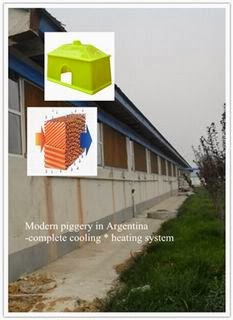
With the government funding, the pork industry has begun to install tunnel ventilation system for summer heat relief. However, the big problem for many is chilled pigs in winter conditions. The pig sale weights decline in the winter and feed conversion gets worse in winter. On the way to find out the reasons of this situation on many farms, it turns out the producers do not do a good job of minimum ventilation. They often use the tunnel curtain as the ventilation inlet for all seasons of the year, so there is no supplemental heat in winter. But on a modernized pig farm, other than the advanced breeding equipment, the complete ventilating and heating system is necessary, so now the advanced cooling and heating facilities are assembled.

Actually, in the 1980s, the swine production in Argentina has already started a modernization stage. Owing to the pig farming intensification and genetic and nutritional improvements, the productivity and quality were bettered a lot. Besides, the vertical integration from primary producers investment in slaughter plants were also observed. The important investment was made in infrastructure, facilities and confinement equipment that noticeably improved productivity levels.

Until now, many modernized large pig farms in Argentina has mechanical ventilation, generally consisting of extractors and fans; automatic feeding system; evaporation panel cooling system or water sprinkler. Of the farrowing/nursing sheds, the farms have heat systems, like thermal blankets, gas heating, radiated heat and salamander stoves. For the pregnant sows, the farms have pasture and confinement, like sow stalls and farrowing crates. And in Argentina, pigs are kept in extensive open air system, intensive confinement system, and in the combination of these two systems.

In general, by the technical efficiency and the expert skills of farmers, the pig farming industry of Argentina is well developing and well developed.
email:info@pig-farming.net or nicholepandora@gmail.com

Pig Farming in Australia

In the early days the pig was fed with food scraps, and late it became a sideline to the dairy industry. In order to utilize the products from butter and cheese manufacture, the pig was fed the left over skim milk and whey. The pig’s diet was next extending to include home grain, which allowed the industry to further expand. And the advanced feed devices and water fountains are used to meet the expanding for professionalization.

Before the pig industry developed, pigs were mostly kept as a sideline enterprise on mixed farms, they were kept in outdoor runs and rough shelters. Subsequent development brought better sheds and concrete yards for easy cleaning. Through further progress, many pig producers changed over to intensive housing. The intensive sheds had various forms of effluent disposal, such as slotted drainage floor pits. These were connected to either outside effluent ponds or were disposed by tanker trailer which carted the effluent off site where it was sprayed on the land for fertilizer. A further development was group housing in sheds using straw bedding.

There are many and varied ways to raise pigs in Australia. Farmers use different combination of housing for their pigs depending on their individual farm setup. Usually there are complete pig equipment in the pig house other than the advanced feed and water devices.

The Australia pork industry has spent millions of dollars on research into how best to house pigs at various stages of growth. These research results have contributed to standards for housing pigs internationally and have shown that the Australian pig industry is dedicated to pig welfare, environment stewardship and to the education of stock persons who handle the pigs.

The farrowing crates are not the same thing as sow stall. When the sow give birth to the piglets, it is moved to a farrowing crates to prevent the sow from being able to get away from its piglets and to reduce the trampling and crushing of piglets due to the tiny dimension of the crate.

Sow stall and farrowing crates are two common devices use in today pig farming. The pregnancy pig is confined in the sow stall to make it easier for stock people to individually supervise and examine pigs and feed/water them. Pregnancy pig is moved to farrowing crates when giving birth to piglets and it is to reduce the trampling and crushing of piglets by the sow by forcing the sow lie down slowly and carefully. And the ventilating-cooling devices and heating devices are also necessary for high pig production quality.
email:info@pig-farming.net or nicholepandora@gmail.com

Pig Farming Industry in Brazil

Brazil is the largest country in South America with rich soil, high corn and soybean productivity, and well climate, so the pig industry in Brazil is well-developed, and pig farming in Brazil has shown significant growth since 2004, occupying the 4th position in the world ranking after China, Russia and America.

To make the possible growth, the pig producers in Brazil have been continually modernized, increasing the productivity each year and improving the quality of the herds by utilizing feed form from the industries and technical assistance of large national and multinational companies manufacturing industry equipment and chemicals.

Traditional Brazilian pig farms in the south most are small and mid-sized pig farming systems (typically with less than 250 sows). The farmers of these farms usually employ the arrangements with large agribusiness that will provide genetics, feed and technical services before purchasing the final products.

In some integrated pig farms, the producer are generally employing the complete farrowing-nursery and finishing facilities. Instead of rooms, producers use barns linked together by a system of sidewalks with low fences to guide the pigs. The
finishing facilities are typically several barns, solid floors with gutter on the outside that flow to an anaerobic digester. Earthen pits are formed into channels and lined with plastic, then cover with membrane, add manure and let the naturally high ambient temp and bacteria produce the methane. As with the finishing barns, the cooling system is combination of natural ventilation, misters/fans and trees. The barns are naturally vented with spray cooling systems and trees are planted on the north side of the barns to provide shade on the roof of the barn.
email:info@pig-farming.net or nicholepandora@gmail.com